

The History of Human Trafficking Awareness Month
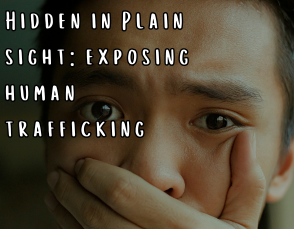
Since 2010, January was named National Human Trafficking Prevention Month. During this month, the government, non-profit organizations, anti-trafficking organizations, law enforcement, survivors, businesses, and everyday citizens all around the world raise awareness about the devastating crime of human trafficking and how to prevent and end it. It’s a call to action to work together to protect those at risk. But, what is human trafficking? Is it really that prevalent in the United States?
“Human trafficking, also known as trafficking in persons, includes both forced labor and sex trafficking. It not only represents a threat to international peace and security, but also undermines the rule of law, robs millions of their dignity and freedom, enriches transnational criminals and terrorists, and threatens public safety and national security everywhere (U.S., 2025).” Human trafficking can take many forms, including sexual exploitation, forced labor, debt bondage, and domestic servitude. This isn’t just an issue that happens internationally, it happens right here in the United States, in DeKalb County. In fact, 27.6 million people worldwide are subjected to human trafficking and there have been reports of this crime in all 50 states (U.S., 2025).
What is Human Trafficking?
Sex Trafficking
Sex trafficking is the recruitment, harboring, soliciting, or obtaining of a person for the purpose of a commercial sex act by force, fraud, or coercion. It can include remote interactive sexual acts, personal sexual servitude, residential sex trafficking, outdoor solicitation, and escort services. This can happen in bars, massage parlors, hotels, truck stops, apartment complexes, on the street, through escort services, and, yes, in residential neighborhoods. Sex traffickers increasingly use social media and other online platforms to recruit and exploit victims and to advertise.
Forced Labor
Labor trafficking is the recruitment, harboring, soliciting, or obtaining of a person for labor of services through use of force, fraud, or coercion being subjected to involuntary servitude or slavery (Homeland, n.d.). It can be found in industries such as landscaping, hotels, hospitality, construction, agricultural, restaurants/food service, forestry, carnivals, factories, and commercial cleaning services
Human Trafficking is NOT:
- Smuggling.
- The term “human smuggling” is used when people are being moved across a border. Trafficking does not require a border crossing. In fact, many human traffickers and survivors are U.S. citizens.
- Prostitution, which is a state misdemeanor crime in most states in the U.S.
- Labor exploitation, which is violations of minimum wage, overtime, or workplace safety.
- Illegal adoption.
At Risk Populations
There is no certain profile of a human trafficking victim because traffickers will exploit anyone they believe they can take control of and earn them a profit, regardless of age, sex, class, or immigration status. Though there is no particular person that a trafficker may target, the following populations may be at increased risk:
- Those who have experienced childhood abuse or neglect.
- Children in foster care.
- Children in juvenile justice systems.
- People experiencing homelessness.
- Individuals living in poverty.
- Survivors of domestic and sexual violence.
- Displaced individuals due to natural or man-made disasters, political instability, or war.
Human Trafficking Impacts Survivors for Life
Because traffickers use incredibly traumatizing forms of control, trafficking survivors may feel the impact of this long and short term. This can have physical, mental, and financial consequences. Injuries, infections, or lack of medical care can create medical issues. Survivors may experience anxiety, depression, insomnia, memory loss, and/or PTSD. “Victims also suffer financial consequences from trafficking since they are often left destitute, in more debt, and have lost collateral such as homes (Homeland, n.d.).” Sometimes a survivor may be accidently arrested or deported due to human trafficking, and could have a difficult time finding a job or finding housing.
Victims’ Assistance
All survivors can receive mandated assistance in compliance with the Victims’ Rights and Restitution Act and the Crime Victims’ Rights Act. This can mean being able to receive referrals for food, shelter, health care, safety planning, legal services, and other recovery services. Safe Passage is also a resource human trafficking survivors can use for free including legal advocacy, medical advocacy, shelter, case management and more. Additionally, the U.S. Citizenship & Immigration Services can help survivors of human trafficking by providing immigration benefits.
Resources
Homeland Security. (n.d.). Human Trafficking Quick Facts. https://www.dhs.gov/human-trafficking-quick-facts
U.S. Department of State. (2025, January 20). National Human Trafficking Prevention Month. Office to Monitor and Combat Trafficking in Persons. https://www.state.gov/national-human-trafficking-prevention-month/
Written by: Kirsti McNeece